Experienced Crews | Professional Equipment | Studio & Remote Production

Posts tagged ‘Interview Video St Louis’

Let Your Customers Sell: The Question Playbook for Video Testimonials

If your best prospects could sit in on one honest conversation with your happiest customer, they’d buy faster and with more confidence. That’s the power of a well-structured video testimonial. The trick isn’t fancy gear or a lucky soundbite—it’s asking the right questions in the right order, and creating an environment where real stories surface naturally.

Below is a pragmatic, field-tested playbook we use at St Louis Video Production to plan, conduct, and repurpose testimonial interviews that actually move the needle.


Why Video Testimonials Work (and What “Good” Looks Like)

Good testimonials:

  • Match the buyer’s journey (awareness → evaluation → decision).
  • Frame the before → during → after in concrete, measurable terms.
  • Address common objections (risk, cost, speed to value, switching pain).
  • Feel unscripted but are guided—crisp answers, human details, proof.

Signal you’ve nailed it: prospects echo your customer’s own phrases back to your sales team, and sales uses the clips proactively (not just marketing).


Pre-Production: Set the Table for Truth

Define the story arc

  • ICP: Which customer profile do we want more of?
  • Use case: Which problem-outcome pair matters most this quarter?
  • Proof target: What metric, milestone, or moment will validate success?

Line up logistics

  • Stakeholders: Subject, their boss (for approval), legal/compliance, location contact.
  • Paperwork: Appearance release, location release, product/logo permissions.
  • Guardrails: Topics to avoid (competitive NDAs, regulatory limits), brand voice, no-go claims.

Prep the guest (without over-rehearsing)

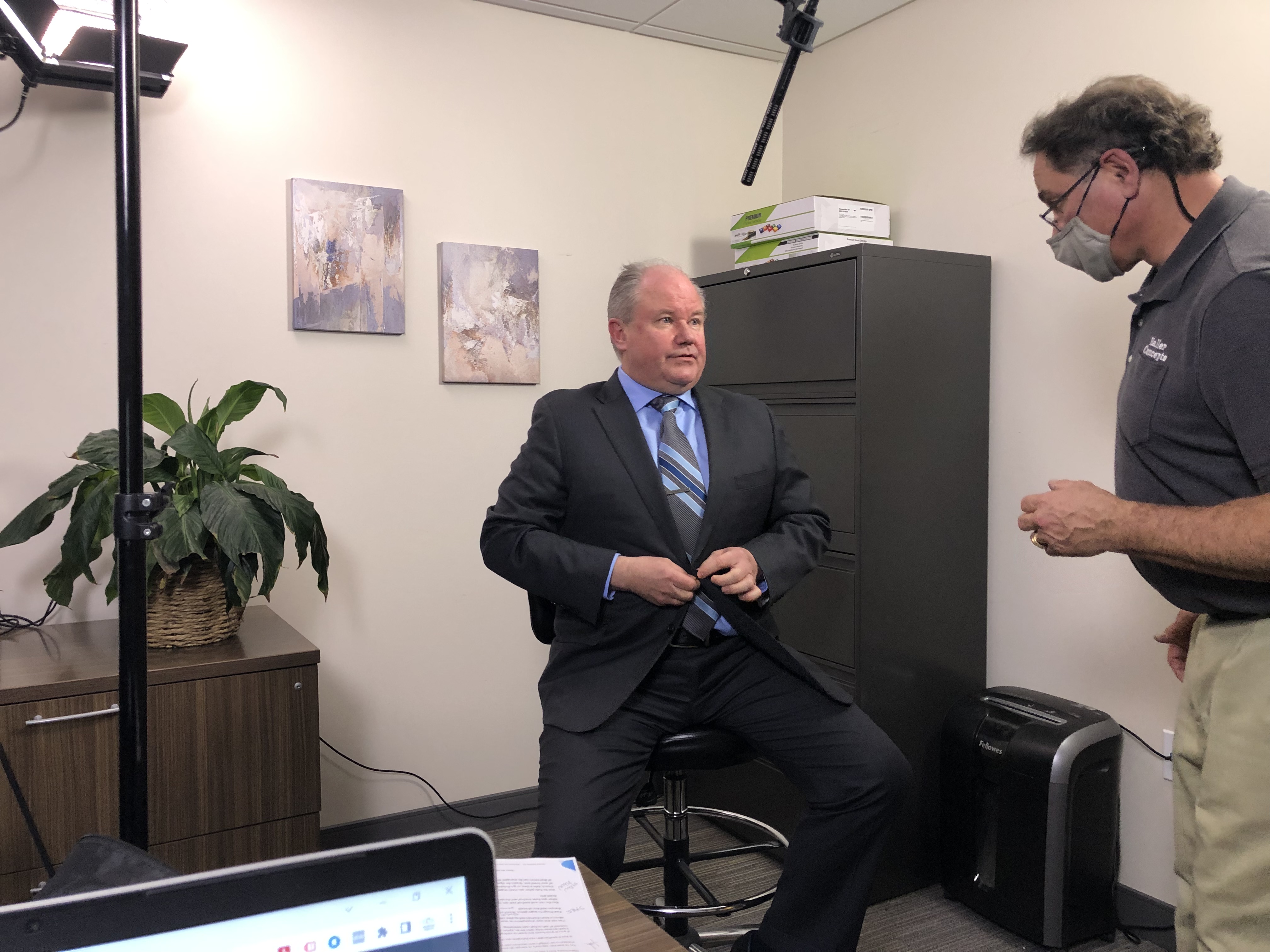
  • Send a 1-page “what to expect” (wardrobe, timing, parking, mic etiquette).
  • Share themes, not scripts; reassure “we’ll guide you.”
  • Ask for artifacts (dashboards, photos, product in use) to film as B-roll.
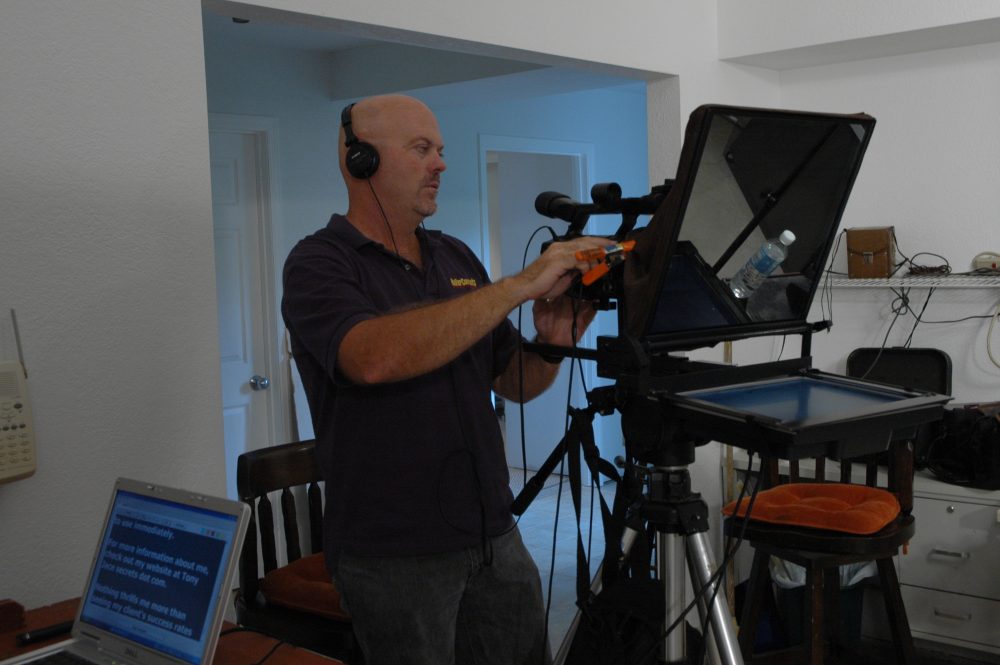
On-Set: Make It Easy to Be Great on Camera

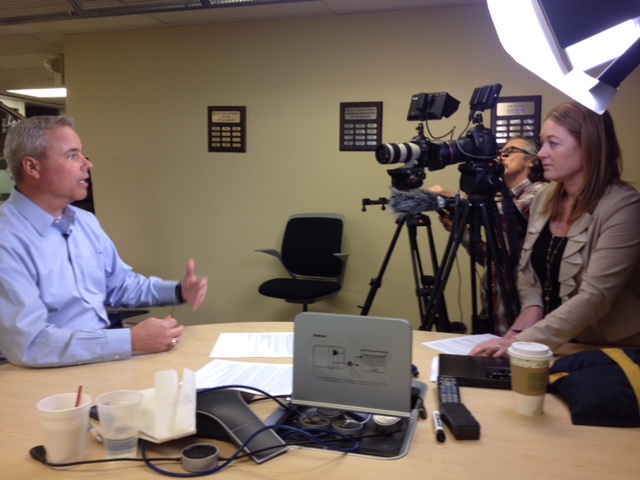
  • Warm-up first. Start with soft, non-work questions to settle nerves.
  • Ask one idea per question. Short prompts → short, usable answers.
  • Go for specifics. Replace “it was better” with “cut onboarding from 10 days to 3.”
  • Follow the energy. When eyes light up, stay curious; ask “What happened next?”
  • Silence is a tool. After an answer, pause; the best add-ons arrive in the quiet.

Technical baseline (so the story shines):

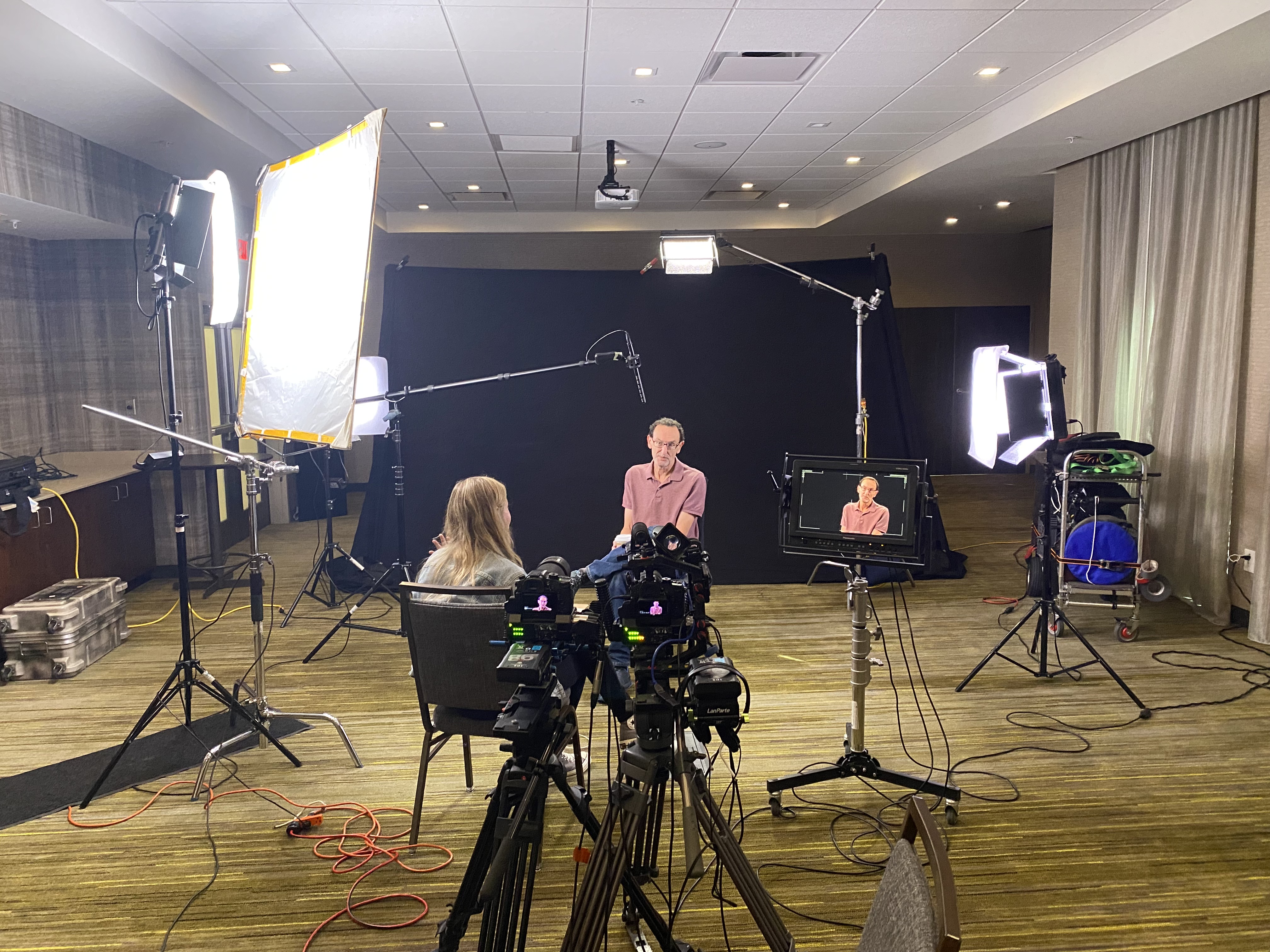
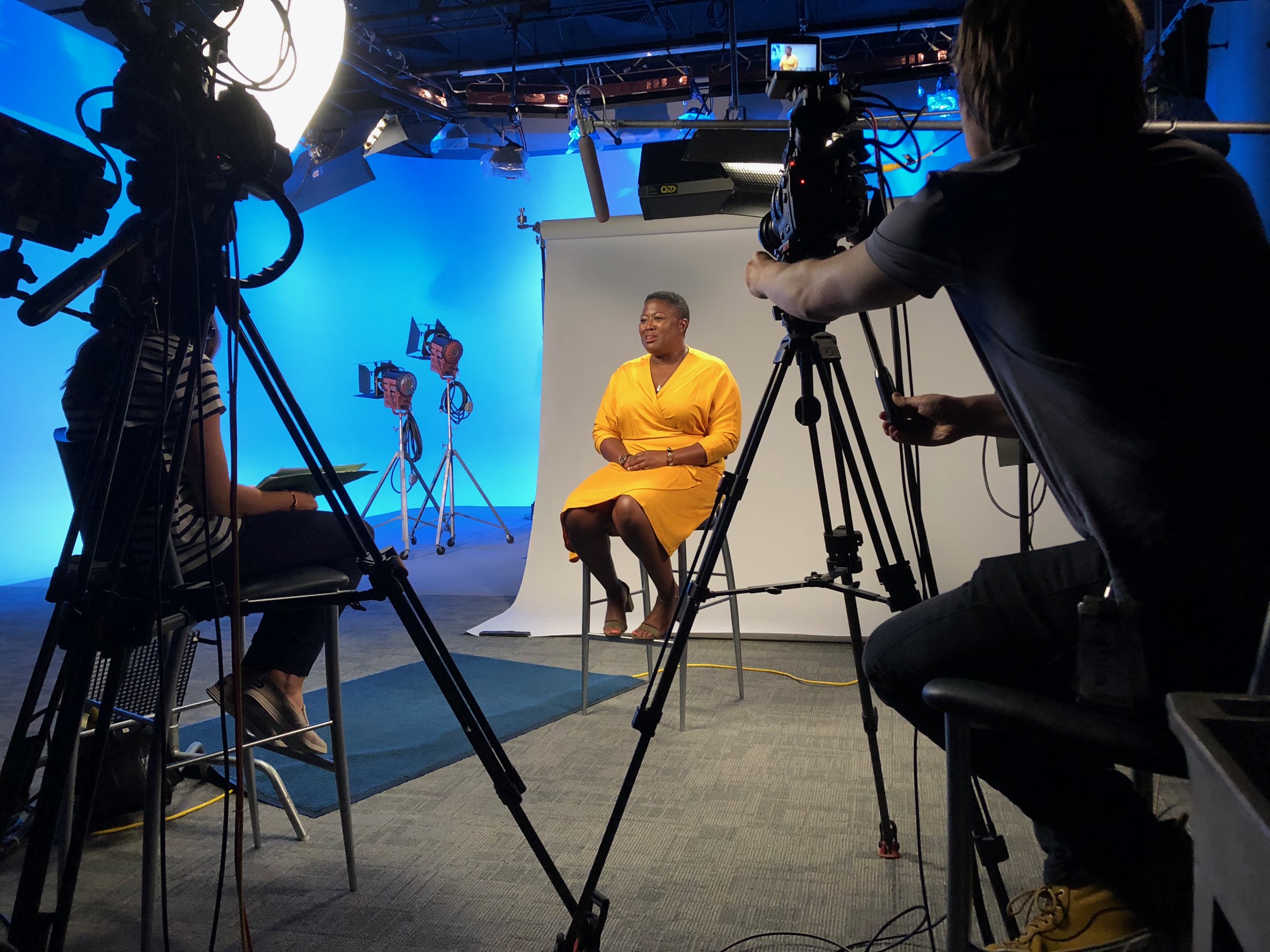
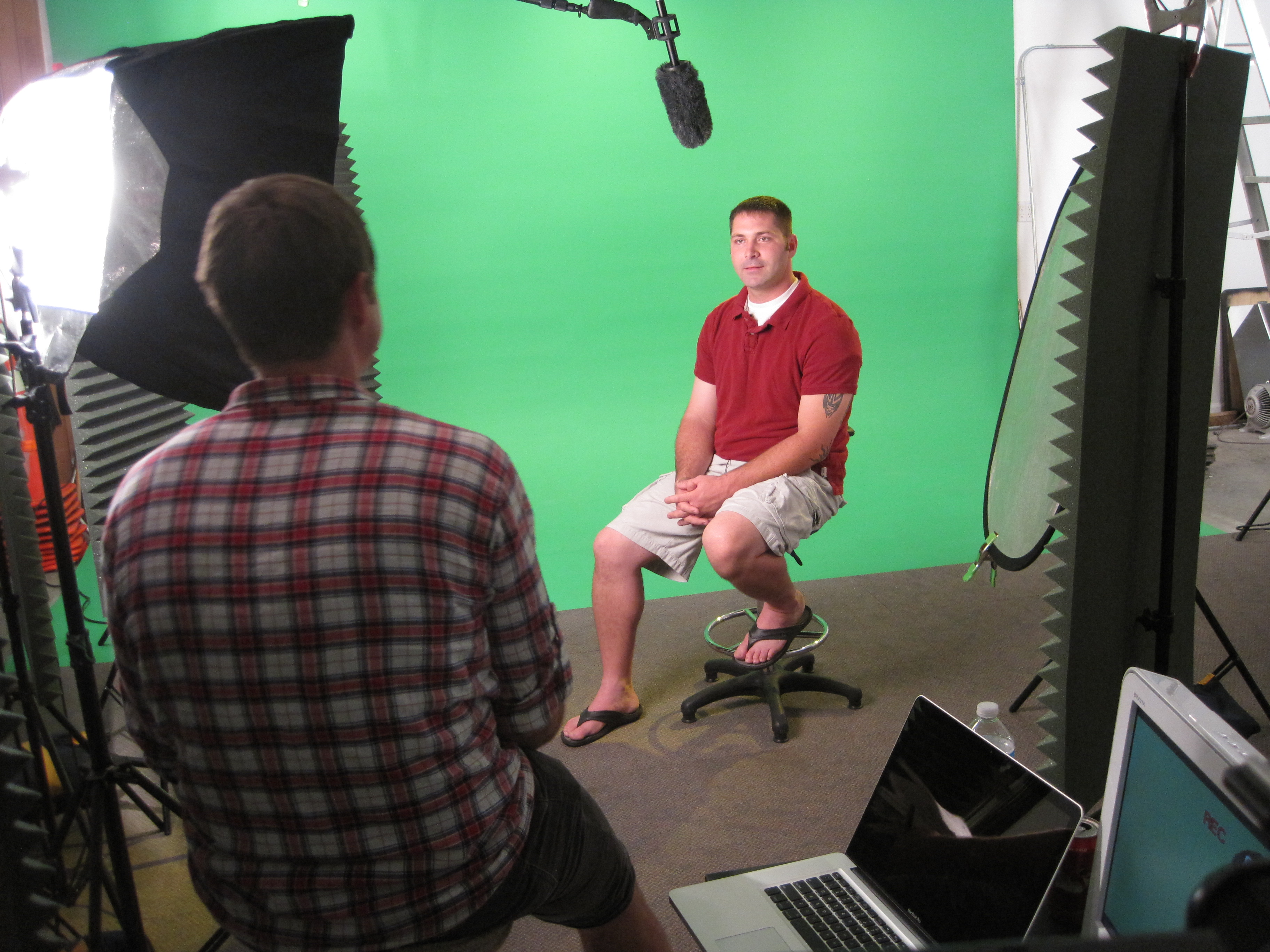
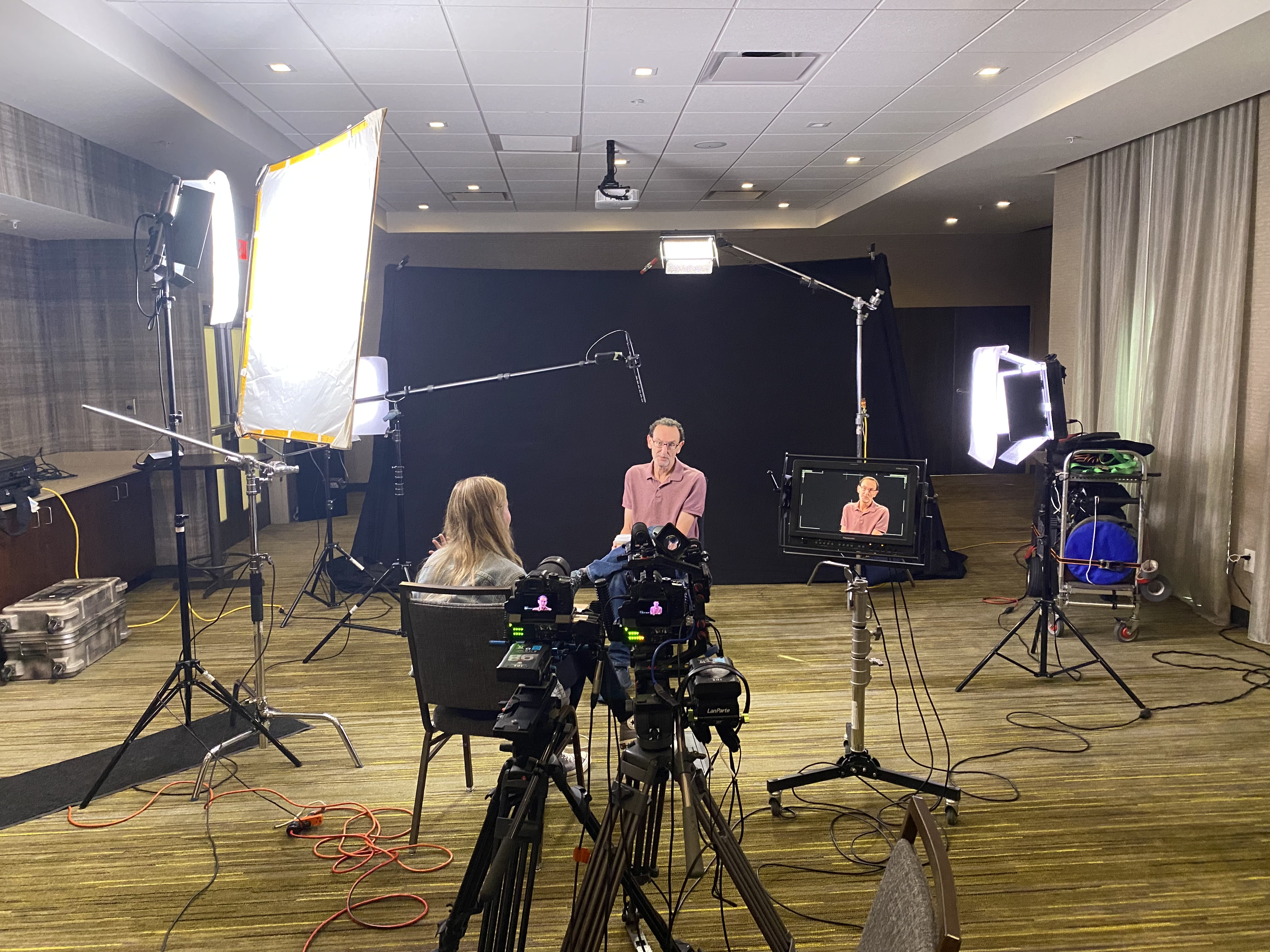
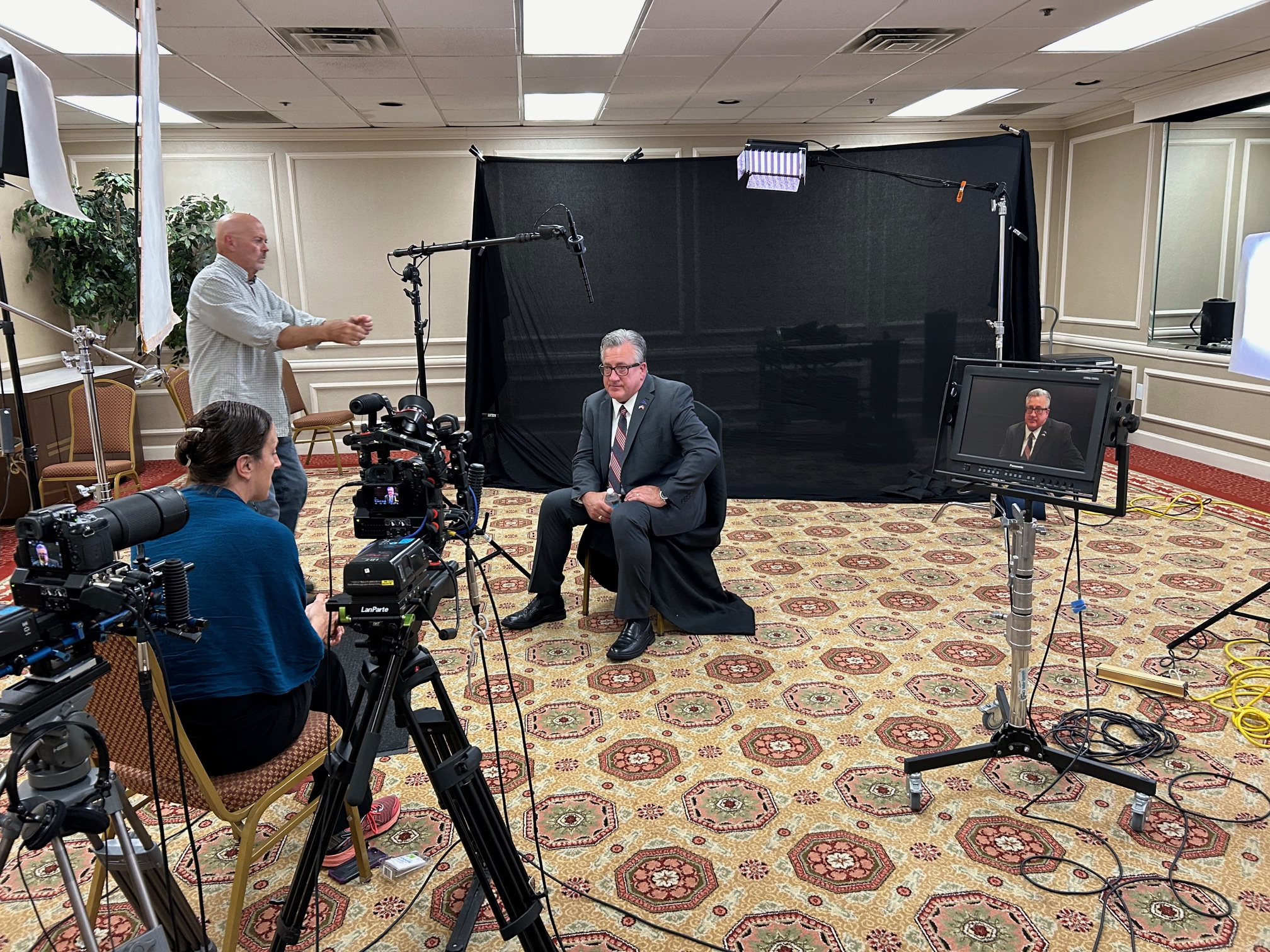
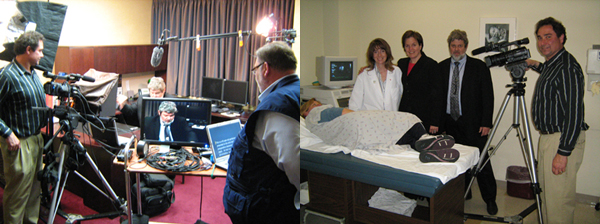
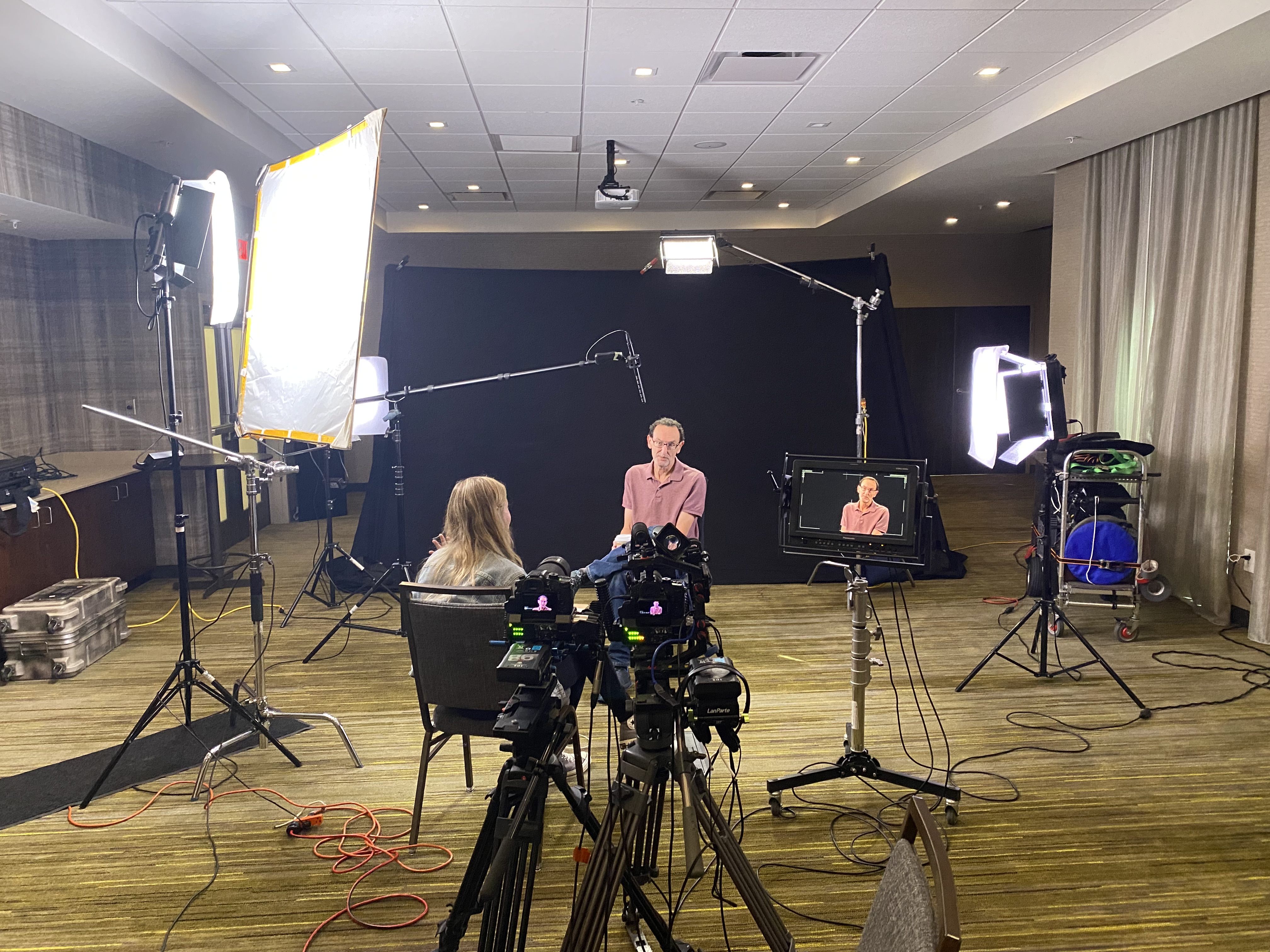
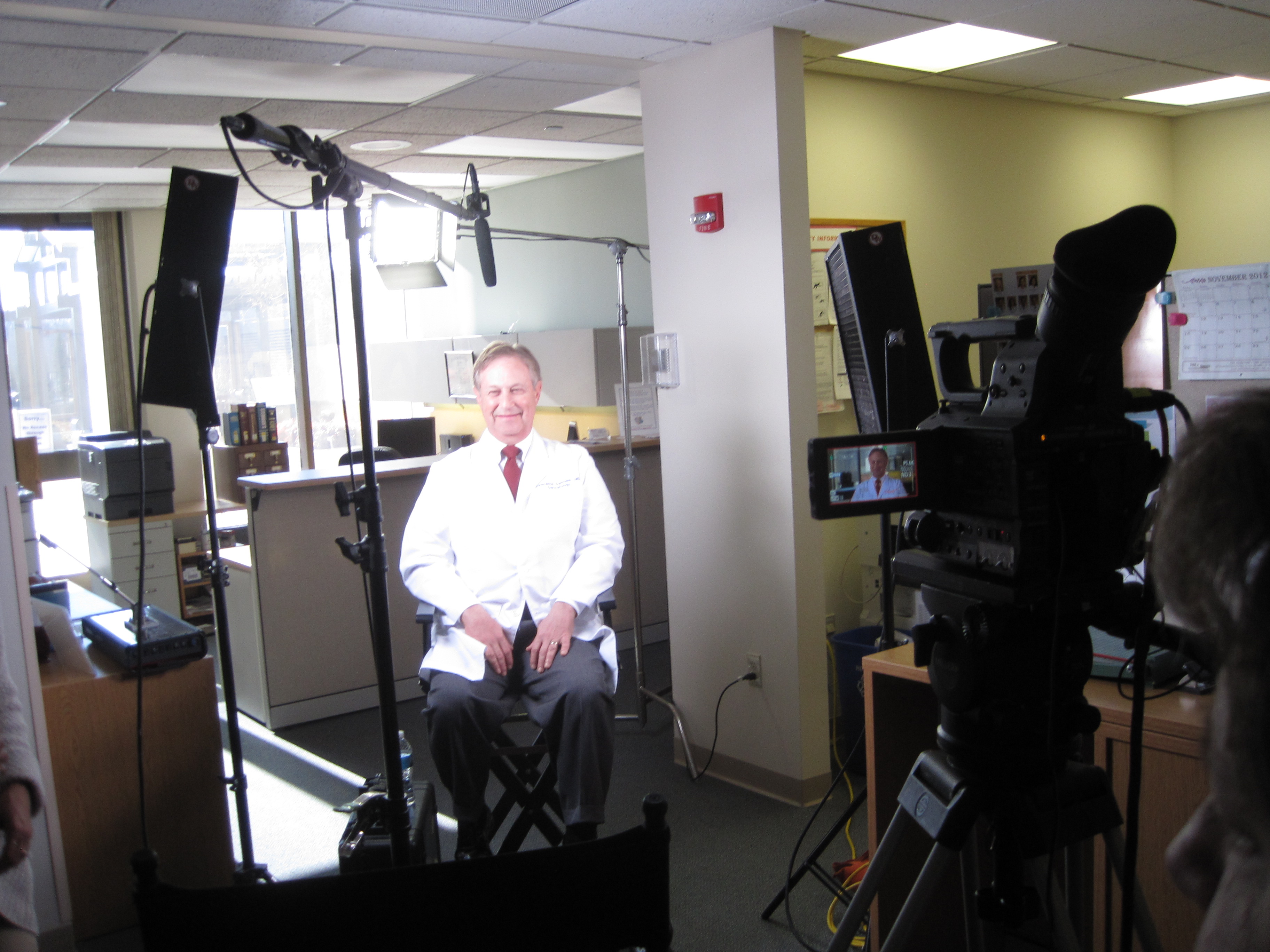
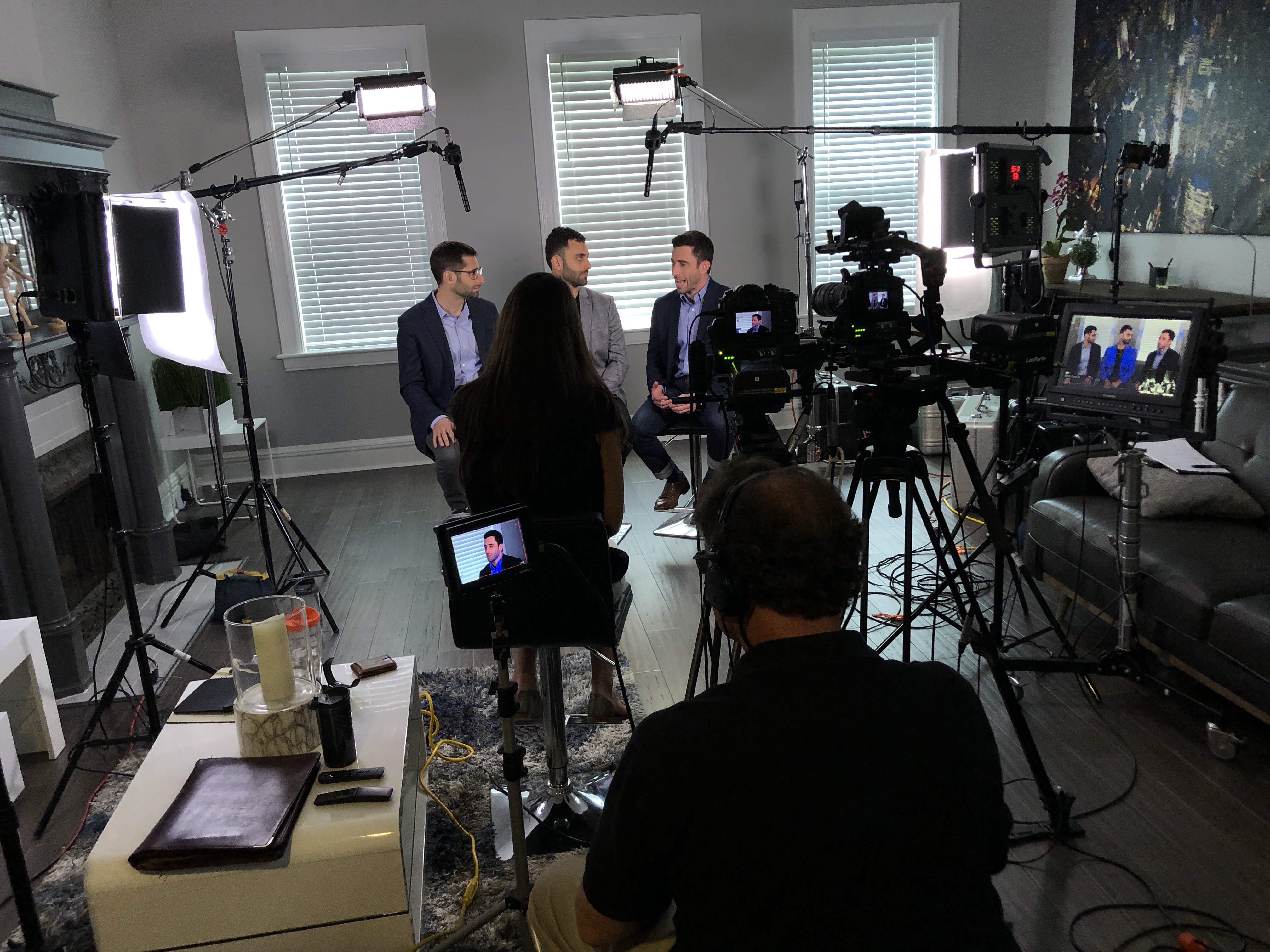
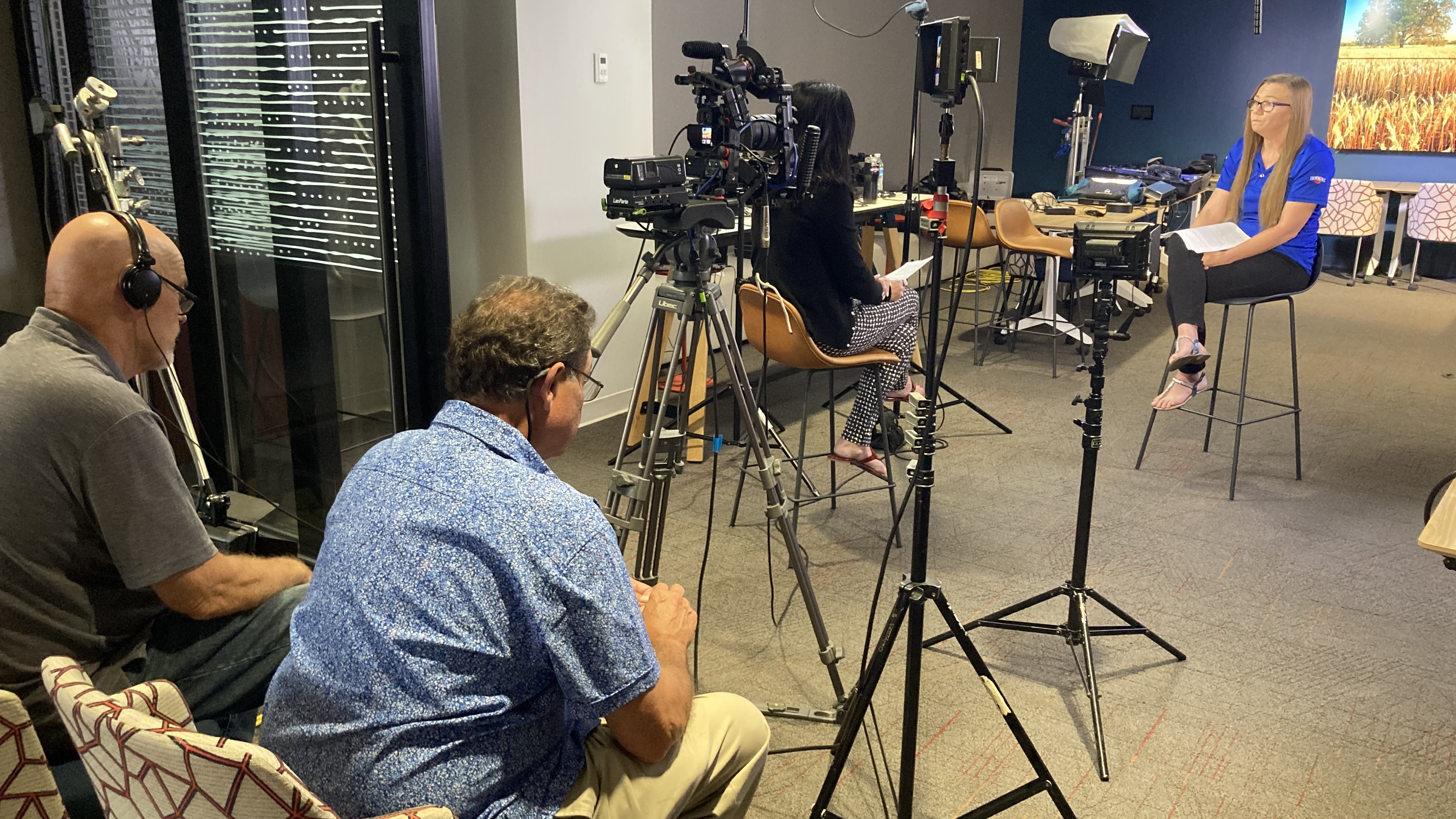
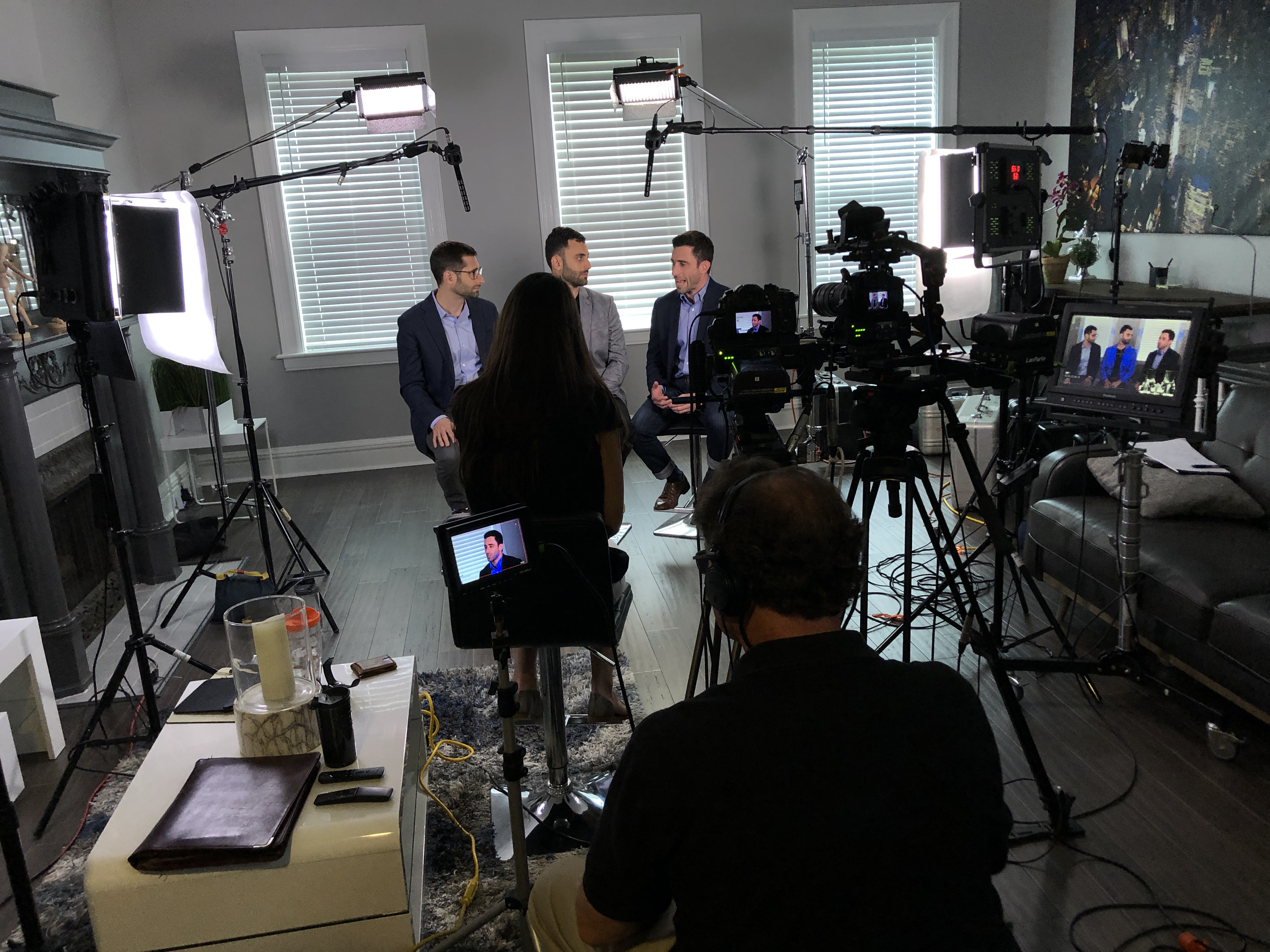
  • Two-camera angle for edit flexibility; lav + boom for clean audio.
  • Soft, flattering key + fill; match brand palette subtly in set elements.
  • Capture plentiful B-roll that shows what the guest says.

The Question Playbook (Organized by Outcome)

Use these as modular blocks. You won’t ask them all—select 8–15 that fit your story arc.

1) Openers that Build Comfort

  • “Where do you work and what do you do day to day?”
  • “What does success look like in your role?”

2) The Before State (Problem and Stakes)

  • “What was the situation before you started looking for a solution?”
  • “What made the status quo no longer acceptable?”
  • “What did the pain look like in numbers (time lost, errors, missed revenue)?”

3) The Search and Selection

  • “What alternatives did you consider, and why didn’t they fit?”
  • “What tipped the decision in our favor?”
  • “What risk felt biggest, and how was it addressed?”

4) Implementation and Experience

  • “Walk me through week one—what actually happened?”
  • “Who was involved on both teams? Any surprises?”
  • “How long until you saw first value? Full value?”

5) Outcomes and Proof

  • “What metrics moved? Baseline vs now.”
  • “What changed for your team or customers?”
  • “What’s a moment you realized this was working?”

6) Objections—Handled on Camera

  • “If someone is worried about cost/switching/complexity, what would you tell them?”
  • “What do you wish you’d known on day one?”

7) Differentiators in Plain Language

  • “What do we do differently than others you’ve worked with?”
  • “What one capability would be hardest to give up?”

8) Emotional Beats (Human Detail)

  • “How does your workday feel different now?”
  • “Who on your team felt the impact first?”

9) Future and Advocacy

  • “What’s next now that this is solved?”
  • “Would you choose us again? Why?”
Industry-Specific Add-Ons

B2B SaaS / Tech

  • “What integrations mattered most?”
  • “How did security/compliance review go?”
  • “What’s your retention or adoption rate after rollout?”

Manufacturing / Logistics

  • “What throughput or yield improvements did you see?”
  • “Any downtime reduction or safety gains?”
  • “Impact on scrap, returns, or on-time delivery?”

Healthcare / Regulated

  • “How did the process respect privacy and compliance?”
  • “Which outcomes are you comfortable sharing publicly?”
    (Avoid PHI; pre-clear wording with compliance.)

Professional Services

  • “Where did the team demonstrate judgment—not just tasks?”
  • “What checkpoint gave you confidence we were on track?”

Recruiting / HR

  • “How many days to fill before/after?”
  • “Quality-of-hire or retention shifts?”

Nonprofit / Public Sector

  • “Community outcome in lives touched, hours saved, dollars redirected?”
  • “How did this influence stakeholder confidence or funding?”

A 10-Minute Interview Outline (Efficient and Effective)

  1. Role & context (0:45)
  2. The “before” and trigger to change (1:30)
  3. Why we were chosen (1:00)
  4. Implementation snapshot (1:30)
  5. Outcomes with numbers (2:30)
  6. Objection handling (1:00)
  7. Differentiator and recommendation (1:00)
  8. CTA-ready closer (0:45)

Make It Visual: B-Roll You’ll Actually Use

  • The system in action: screens, hands, processes, product close-ups.
  • “Day in the life” cutaways: meetings, whiteboards, customers served.
  • Proof artifacts: dashboards, reports, before/after images, shipping lines, storefronts.
  • Emotional texture: smiles, relieved team, quiet focus, celebratory moments.

Edit Structure That Converts

  • Cold open: 3–6 second hook with a quantifiable win.
  • Title card + identity: who’s speaking, why they matter.
  • Problem → solution → outcome in under 90 seconds; keep one idea per beat.
  • End card CTA: what to do next (book demo, schedule consult, watch deeper case).
  • Versions: 16:9 web, 1:1 feed, 9:16 stories/reels; 6s, 15s, 30s, 60–90s cuts.
  • Accessibility: open captions burned in; high-contrast safe zones.

Distribution Plan (So the Story Works for You Everywhere)

  • Website: case-study pages, product pages, pricing page objection handlers.
  • Sales: email follow-ups, proposal decks, QR at trade shows.
  • Social/PR: short cuts with one metric per clip; tag the customer if approved.
  • Lifecycle: onboarding (what good looks like), renewal (outcomes reminder).
  • Paid: A/B test 6s hooks that mirror top objections from sales calls.

Track watch time, quartile completion, CTA clicks, influenced pipeline/revenue; annotate wins to the original testimonial in your asset library.


Ethical, Legal, and Brand Hygiene

  • Signed appearance and location releases (store with the asset).
  • Avoid confidential data on screens; plan redactions in post if needed.
  • Add content credentials/provenance where appropriate.
  • Keep claims truthful; use customer’s own metrics and language.

Quick Do/Don’t

Do

  • Coach for specifics and stories.
  • Ask follow-ups; let them finish.
  • Film lots of purposeful B-roll.

Don’t

  • Put words in their mouth.
  • Lead with jargon or internal slogans.
  • Rely on a single long cut—think modular reuse.

Ready-to-Use Prompt Sheet (Print for Your Interviewer)

  • “What was happening before you started looking for a solution?”
  • “What changed that made you act now?”
  • “What nearly stopped you from choosing us?”
  • “What happened in week one?”
  • “What can you measure that proves this worked?”
  • “If someone’s on the fence, what should they know?”
  • “What do we do that others don’t?”
  • “Would you choose us again? Why?”
Why Teams Choose Us to Produce Testimonials

Since 1982, we’ve helped businesses, marketing firms, and agencies in the St. Louis area capture credible, conversion-ready testimonial stories. Our crews handle everything—from strategy and question design to on-set coaching, filming, and post-production—so your customers look and sound their best while saying what future buyers actually need to hear.

About St Louis Video Production
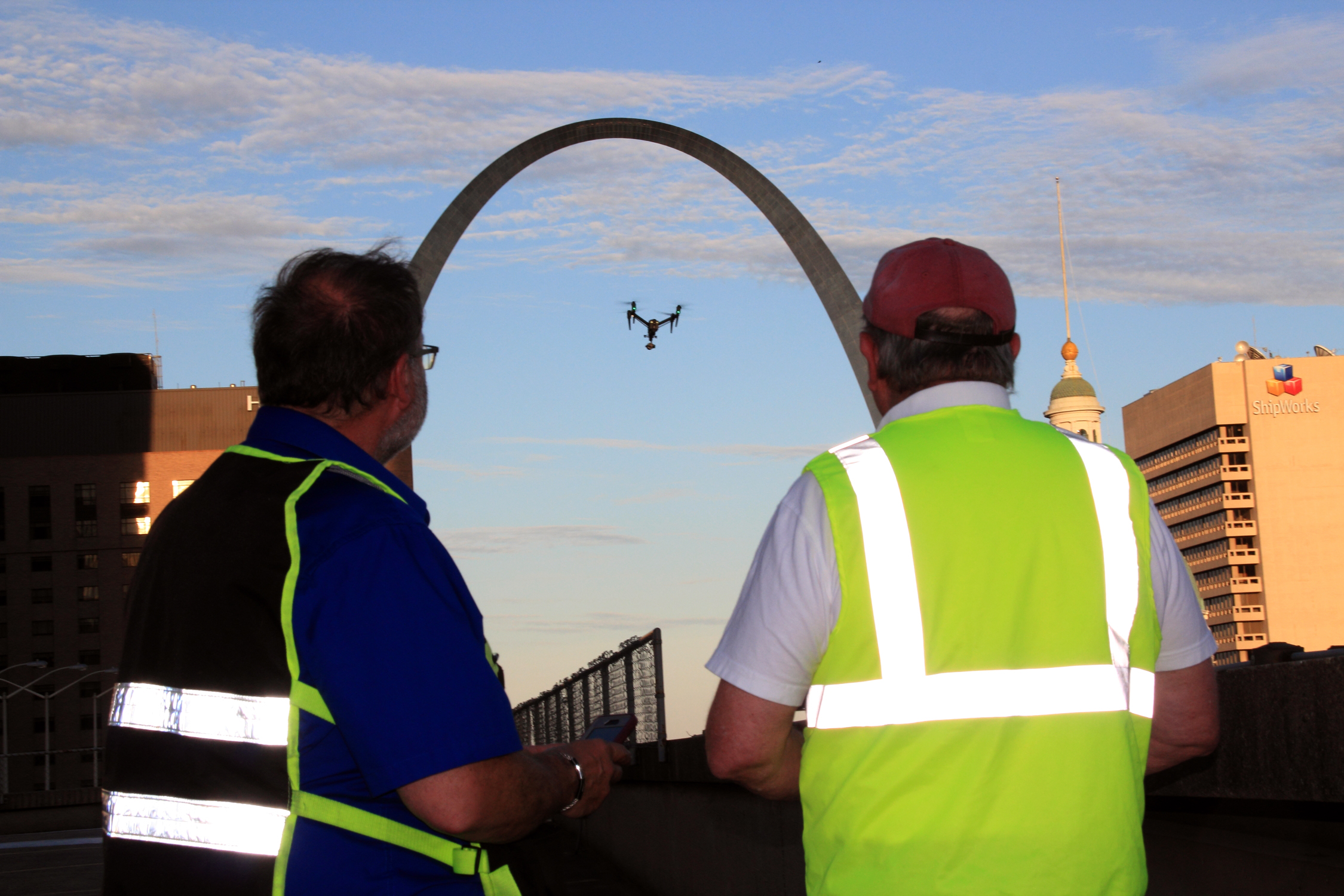
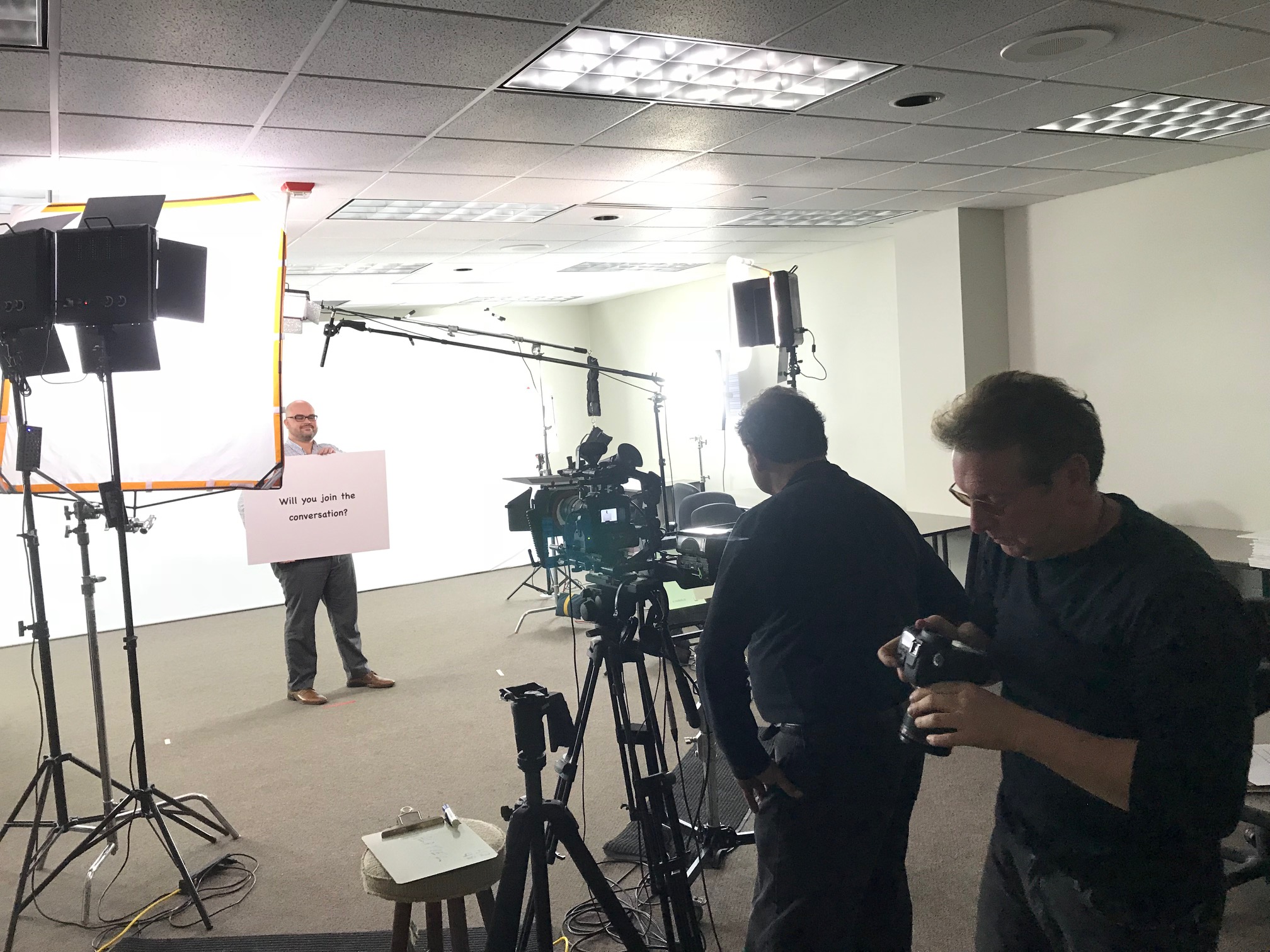
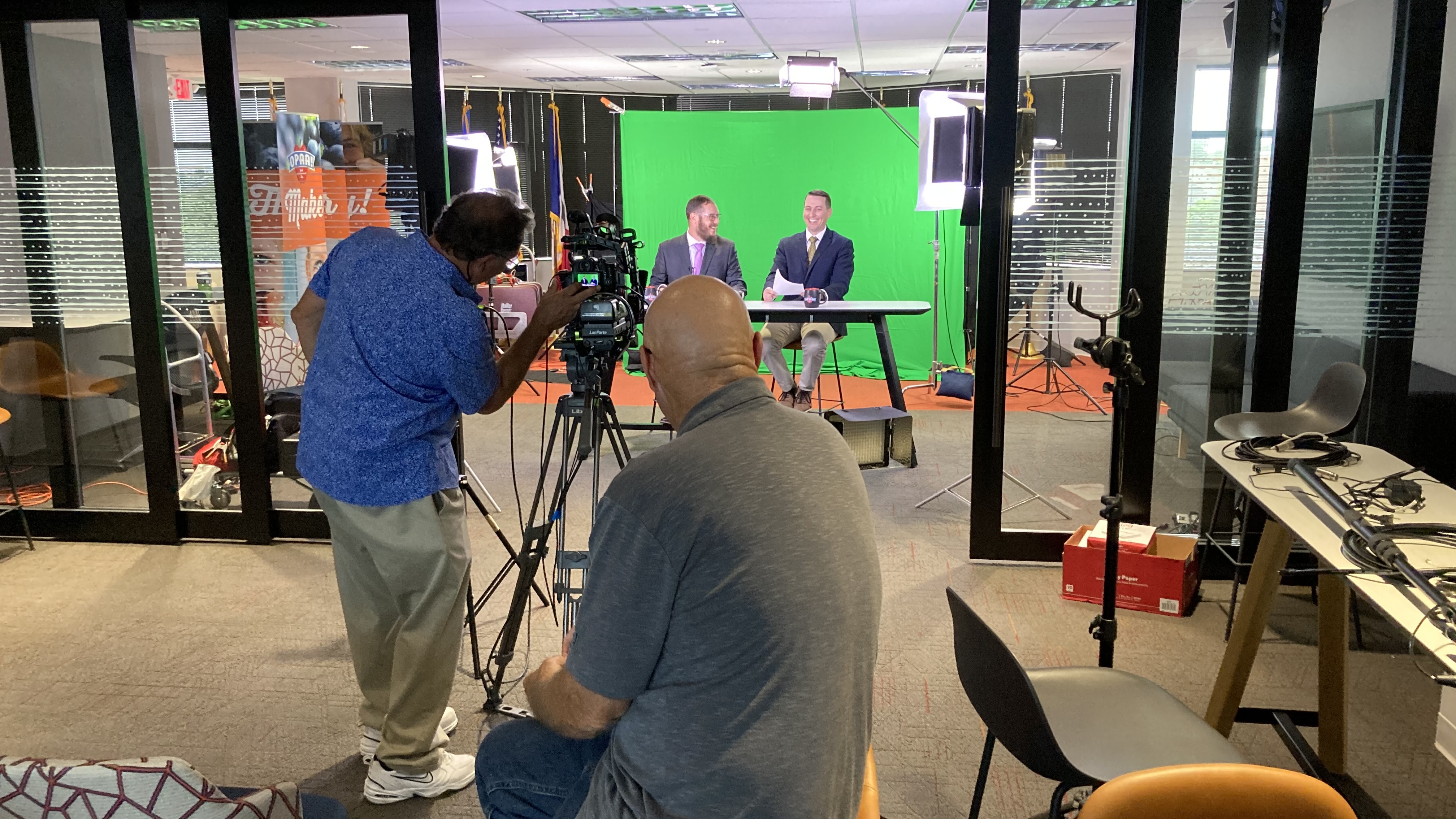
St Louis Video Production is a full-service professional commercial photography and video production company with the right equipment and experienced crew for successful image acquisition. We provide full-service studio and location video and photography, editing, post-production, and licensed drone pilots—including the ability to fly our specialized drones indoors when a dynamic perspective is needed. We customize productions for diverse media requirements and excel at repurposing your photography and video branding to gain more traction across channels. We are well-versed in all file types, media styles, and the accompanying software, and we leverage the latest Artificial Intelligence responsibly throughout our services for speed, consistency, and scale. Our private studio lighting and visual setup is ideal for small productions and interview scenes, with room for props to round out your set. We support every aspect of your production—from setting up a private, custom interview studio to supplying professional sound and camera operators, as well as providing the right equipment—ensuring your next video production is seamless and successful.

Mike Haller 314-913-5626 stlouisvideoproduction@gmail.com
Top Ideas for Creating Engaging Testimonial Videos

In the realm of corporate communication, testimonial videos have emerged as a potent tool for enhancing credibility and building trust with potential clients. When executed effectively, these videos can profoundly impact your brand’s reputation, offering a compelling narrative that resonates with your target audience. As an experienced producer at St Louis Video Production, I’ve seen firsthand how powerful well-crafted testimonial videos can be. Here’s a comprehensive guide to creating engaging testimonial videos that will captivate your audience and drive your message home.

1. Identify the Right Subjects

The foundation of a compelling testimonial video starts with selecting the right subjects. Look for clients or partners who have had a significant positive experience with your company. They should be articulate, enthusiastic, and relatable to your target audience. A mix of high-profile clients and everyday users can provide a balanced perspective.

2. Craft a Structured Narrative

An effective testimonial video should tell a story. Start by crafting a clear narrative structure:

  • Introduction: Briefly introduce the subject and their background.
  • Problem: Describe the challenges they faced before discovering your service or product.
  • Solution: Highlight how your company provided a solution and the benefits received.
  • Conclusion: End with a summary of the positive outcomes and a call-to-action.

This structure helps keep the content focused and engaging, ensuring that viewers can easily follow along and understand the value of your offering.

3. Focus on Authenticity

Authenticity is key to a successful testimonial video. Avoid scripted responses and instead encourage your subjects to speak naturally. Authentic testimonials resonate more with viewers, making your message more persuasive. Capture genuine emotions and experiences to create a more relatable and trustworthy narrative.

4. Utilize High-Quality Production Techniques

To ensure your testimonial video stands out, invest in high-quality production techniques:

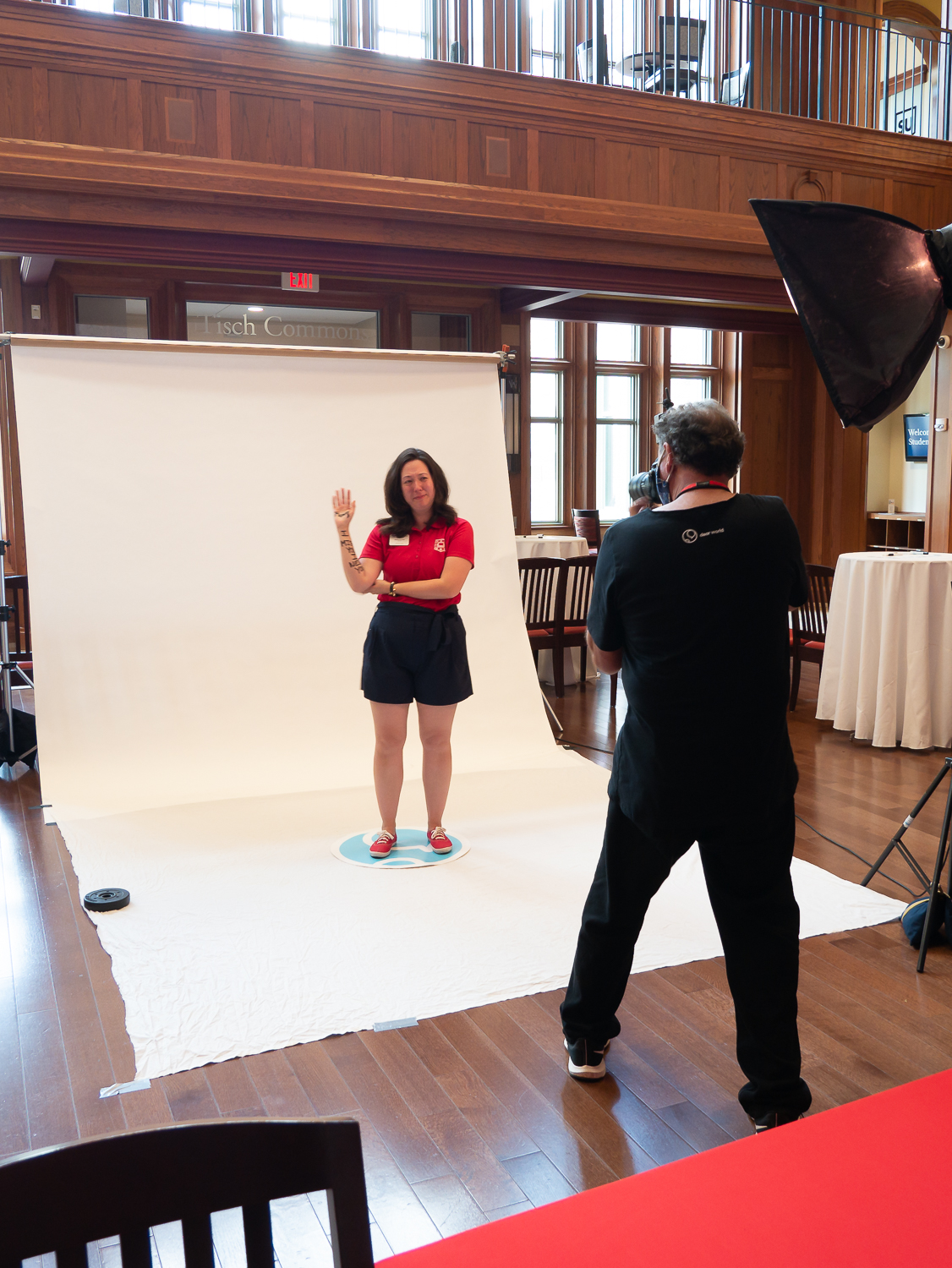
  • Lighting: Proper lighting is crucial for a professional look. Utilize soft, diffused lighting to create a flattering and natural appearance.
  • Sound: Clear audio is essential for effective communication. Use high-quality microphones and minimize background noise.
  • Camera Work: Employ stable camera techniques and varied shots to keep the video visually interesting. Incorporate close-ups for emotional moments and wide shots to provide context.

5. Incorporate Visual Elements

Enhance your testimonial video by incorporating visual elements that complement the narrative:

  • B-Roll Footage: Include footage of the client interacting with your product or service to provide context.
  • Graphics and Text: Use on-screen text and graphics to highlight key points and add visual interest.
  • Branding: Subtly include your brand’s logo and colors to reinforce brand identity.

6. Keep it Concise

While it’s important to cover all necessary points, keep the video concise. Aim for a length of 1-3 minutes to maintain viewer engagement. Focus on delivering the core message without unnecessary details.

7. Include a Call-to-Action

End your testimonial video with a strong call-to-action. Encourage viewers to visit your website, contact your sales team, or take another step towards engaging with your company. Make it easy for them to act on their interest.

Why Choose St Louis Video Production?

At St Louis Video Production, we bring decades of experience and a full suite of services to ensure your testimonial videos are nothing short of exceptional. As a full-service professional commercial photography and video production company, we offer comprehensive studio and location video and photography, including editing, post-production, and licensed drone pilots. Our expertise in repurposing photography and video branding helps your content gain maximum traction.

We are well-versed in all file types, media styles, and accompanying software, ensuring your testimonial videos are produced to the highest standards. Our private studio is equipped with advanced lighting and visual setups, perfect for small productions and interview scenes. From custom interview studio setups to providing sound and camera operators, we have everything you need to make your next video production flawless. We even offer the capability to fly specialized drones indoors for unique perspectives.

Since 1982, St Louis Video Production has collaborated with numerous businesses, marketing firms, and agencies in the St. Louis area, delivering top-notch corporate photography and video services. Let us help you create engaging testimonial videos that not only highlight your successes but also drive meaningful results for your business.

314-913-5626 stlouisvideoproduction@gmail.com
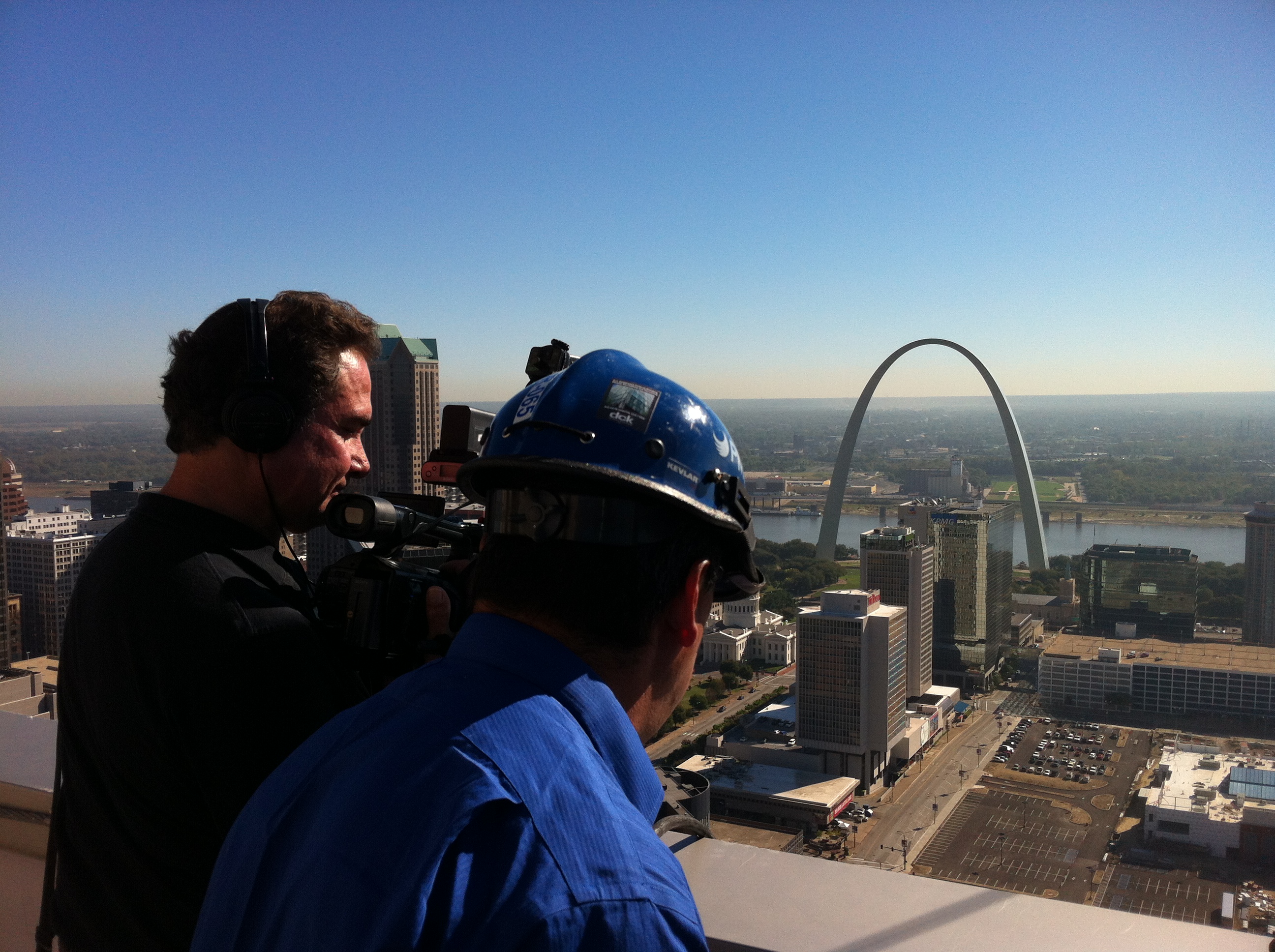
How to Get Ready for Your Next Training Video in Simple Steps

Creating an effective training video requires more than just a camera and a script. It involves careful planning, coordination, and a deep understanding of your audience and the message you want to convey. As decision-makers in your organization, your role is crucial in ensuring the production process is smooth and the final product is engaging, informative, and aligned with your company’s goals. Here’s a step-by-step guide to help you prepare for your next training video.

Whether you use professional actors, company staff, or a mix, they need to be comfortable on camera and able to convey the message effectively.

Step 1: Define the Objective and Audience

The first and most important step is to clearly define the objective of the training video. What are you trying to achieve? Is it to onboard new employees, introduce new processes, or perhaps to enhance skills? Understanding the specific outcome you want will guide the content and structure of the video.

Equally important is knowing your audience. Are they new hires, experienced staff, or a mixed group? Tailoring the content to their level of understanding and the context in which they’ll use this information will make the video more effective.

Step 2: Develop a Detailed Script and Storyboard

Once the objective and audience are defined, it’s time to craft a detailed script. This script should be clear, concise, and aligned with the training goals. A well-written script serves as the backbone of your video, ensuring that all key points are covered logically and comprehensively.

In parallel, develop a storyboard to visualize how each segment of the script will be presented on screen. This includes decisions on camera angles, visual aids, and any on-screen text or graphics. A storyboard helps in aligning the production team’s vision with your expectations and ensures a cohesive final product.

Step 3: Choose the Right Talent

The people who appear in your training video are crucial to its success. Whether you use professional actors, company staff, or a mix, they need to be comfortable on camera and able to convey the message effectively. If the video involves complex or technical information, ensure the talent has a solid understanding or can be briefed thoroughly.

Step 4: Plan the Location and Setup

The location of your shoot plays a significant role in the video’s effectiveness. It should be relevant to the content and free from distractions. Whether you’re filming in an office, a factory floor, or a studio, ensure that the environment enhances the learning experience.

Consider the setup carefully. This includes lighting, sound, and camera placement. Professional production companies, like St Louis Video Production, have the expertise to create an optimal setup, whether in-studio or on-location, to ensure high-quality visuals and audio.

Step 5: Schedule the Shoot Efficiently

Time is money, especially in video production. Plan your shoot schedule meticulously, accounting for setup time, breaks, and any potential delays. Ensure all participants know their roles and timings to keep the production running smoothly.

Step 6: Engage in Post-Production Review

Once the shoot is complete, the raw footage will go into post-production. This stage involves editing the video, adding graphics, animations, and any special effects, and ensuring the final product aligns with your initial goals.

Engage in the review process actively. Provide feedback on the first cut and be clear about any changes you’d like to see. At St Louis Video Production, we understand the importance of this collaborative process and work closely with our clients to refine the video until it meets their expectations.

Step 7: Plan for Distribution

Finally, consider how the video will be distributed. Will it be hosted on your company’s intranet, shared via a learning management system, or used in live training sessions? Understanding the distribution method helps in optimizing the video’s format and resolution.

Partner with Professionals for Optimal Results

At St Louis Video Production, we bring decades of experience in corporate photography and video production, ensuring every project we undertake is executed with precision and creativity. Our team of professionals is equipped with the latest technology, including specialized drones for indoor use, and we offer full-service studio and location video and photography, editing, post-production, and licensed drone pilots.

Whether you need a private custom interview studio setup or comprehensive video production services, we can help make your next training video not just a success but a valuable tool for your organization. Our expertise extends to repurposing your photography and video branding, helping you gain more traction across different media platforms.

With a rich history of serving businesses, marketing firms, and agencies in the St. Louis area since 1982, St Louis Video Production is your trusted partner in creating impactful and professional training videos. Let us help you tell your story effectively and efficiently, ensuring your message resonates with your audience and achieves your training objectives.

Mike Haller 314-913-5626 stlouisvideoproduction@gmail.com
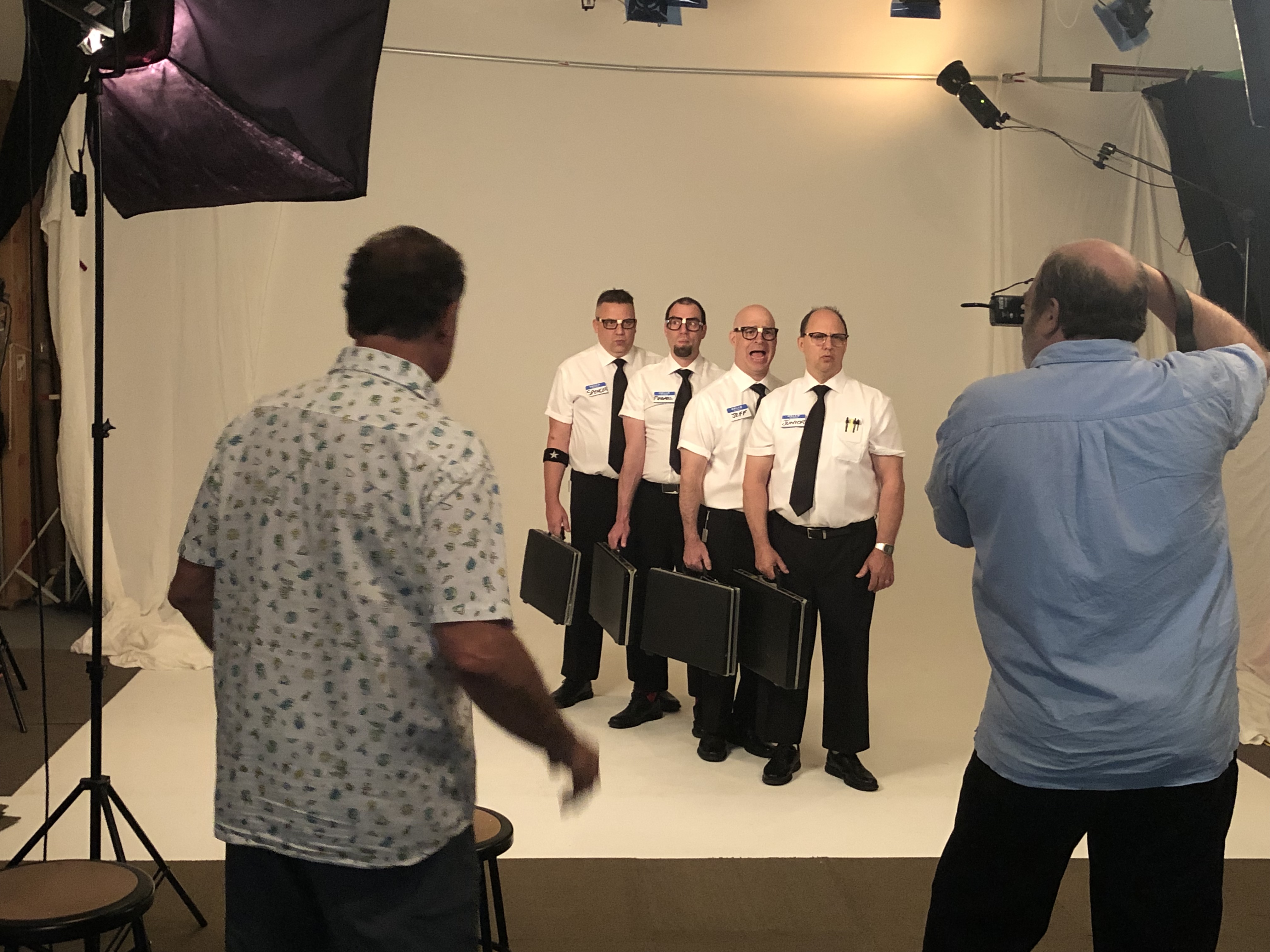
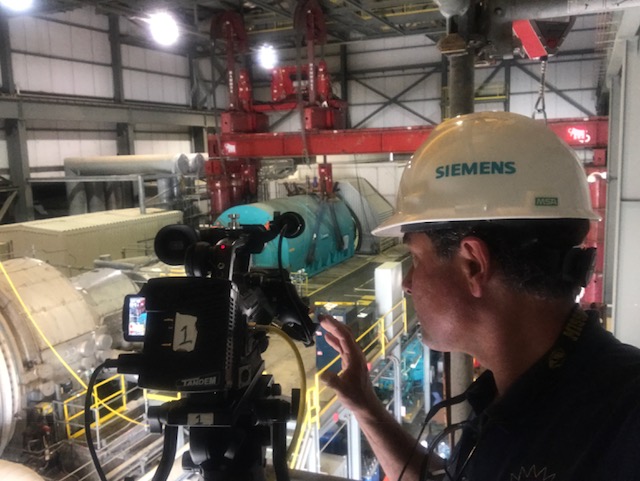
Frequently Asked Questions for a Remote Location Video Shoot

1. What are the initial steps to plan a remote location shoot?

Answer: The first step in planning a remote location shoot involves thorough pre-production planning. This includes scouting the location to understand the environment, obtaining necessary permits, and coordinating logistics such as travel and accommodation for the crew. Additionally, it’s important to develop a detailed shot list and storyboard to ensure all necessary shots are captured efficiently. Communication with local authorities and stakeholders is also crucial to ensure compliance with any local regulations and to address any potential challenges specific to the location.

2. What equipment is necessary for a remote location shoot?

Answer: Essential equipment for a remote location shoot includes cameras, lenses, tripods, lighting equipment, microphones, and audio recorders. Depending on the location and shoot requirements, additional gear such as drones for aerial shots, portable power supplies, and stabilization equipment may be needed. It’s also important to have backup equipment to address any technical issues that may arise during the shoot. Ensuring all equipment is properly packed and protected for transportation is key to a successful shoot.

3. How do you handle unpredictable weather conditions?

Answer: To handle unpredictable weather conditions, it’s important to monitor weather forecasts closely leading up to the shoot and have contingency plans in place. This may include having weatherproof gear for both equipment and crew, scheduling buffer days to accommodate potential delays, and identifying indoor or sheltered locations as backup options. Flexibility and adaptability are crucial, as well as maintaining open communication with the client about any necessary changes to the schedule or shoot plan.

4. What are the key considerations for crew and talent logistics?

Answer: Key considerations for crew and talent logistics include arranging transportation, accommodation, and catering. It’s important to ensure everyone is well-rested and comfortable to maintain high energy levels and morale throughout the shoot. Clear communication about the shoot schedule, call times, and location specifics is essential. Additionally, providing detailed itineraries and contact information for all key personnel helps facilitate smooth coordination and quick resolution of any issues that may arise.

5. How do you ensure high-quality audio and video in a remote location?

Answer: Ensuring high-quality audio and video involves using professional-grade equipment and employing experienced technicians. For video, this means using high-resolution cameras, proper lighting, and stabilization tools. For audio, using directional microphones, wind protection, and monitoring audio levels during recording is crucial. Conducting test shots and audio checks before the shoot helps identify and address any potential issues. Additionally, having a dedicated audio engineer on set can greatly enhance the overall production quality.

6. What is the process for obtaining permits and permissions?

Answer: The process for obtaining permits and permissions varies depending on the location. It typically involves contacting local authorities or government offices responsible for filming permits and providing details about the shoot, including dates, times, locations, and the nature of the production. Some locations may also require proof of insurance and adherence to specific guidelines or regulations. It’s important to start this process early to avoid delays and ensure all legal requirements are met.

7. How do you manage post-production for remote shoots?

Answer: Managing post-production for remote shoots involves organizing and backing up all footage and audio files as soon as possible. Using cloud storage or portable hard drives ensures that the data is secure and accessible. Clear labeling and metadata tagging help streamline the editing process. Communication between the on-site team and post-production team is crucial to ensure that all necessary elements are captured and any potential issues are addressed promptly. Utilizing remote collaboration tools can also facilitate efficient feedback and revisions.


Expertise of St Louis Video Production

St Louis Video Production is a full-service professional video production and commercial photography company with extensive experience in handling remote location shoots. Since 1982, we have been providing top-tier video and photography services, including studio and location shoots, editing, post-production, and licensed drone operations. Our seasoned crew is equipped with the latest technology and creative expertise to ensure successful image acquisition in any environment. Whether it’s navigating logistical challenges or adapting to unpredictable conditions, our comprehensive approach and dedication to excellence guarantee the highest quality results for our clients.

314-913-5626 stlouisvideoproduction@gmail.com
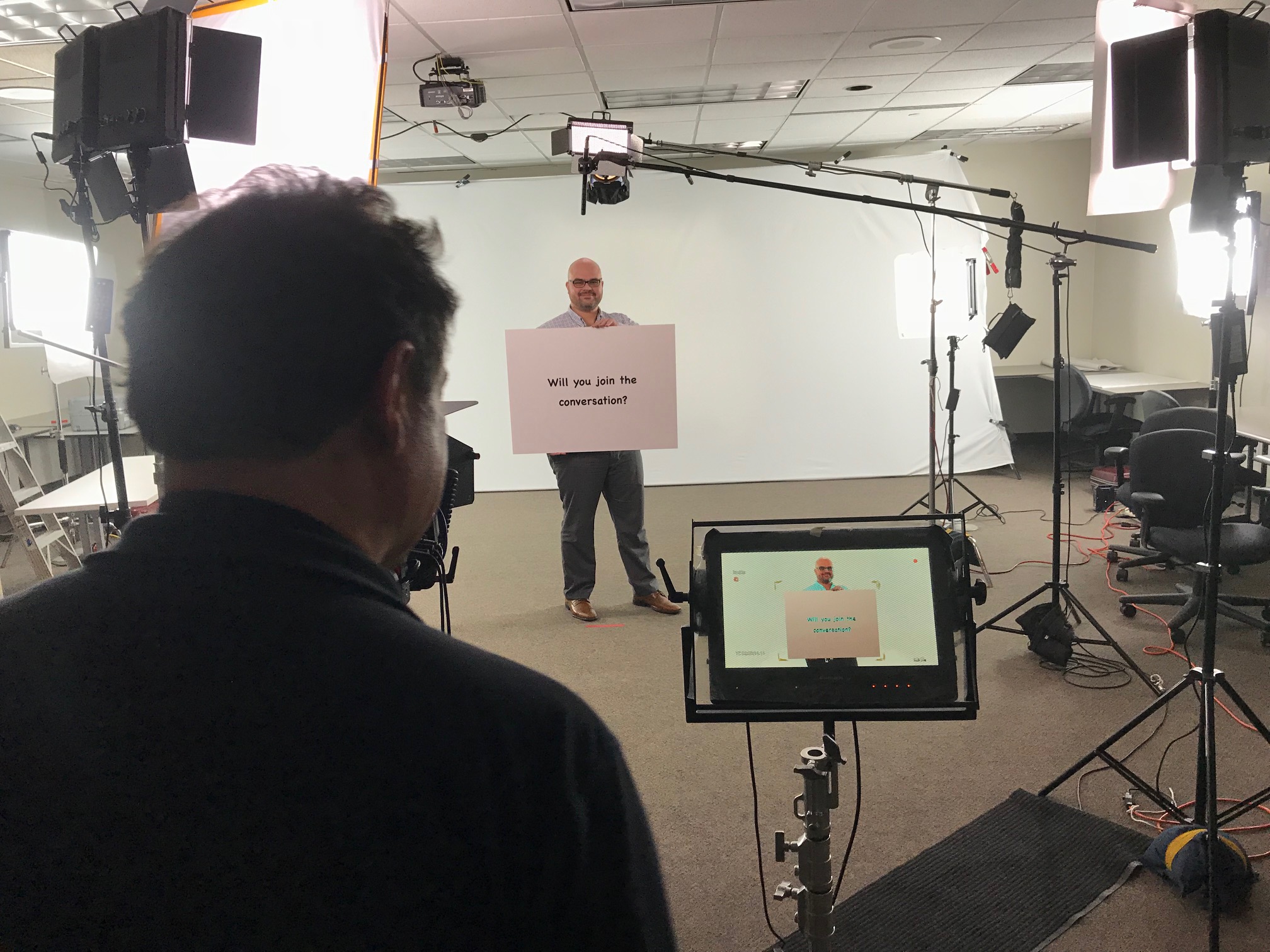
The Art of Scripting Customer Interviews for Effective Sales Videos

Are you looking to create compelling sales videos that resonate with your target audience and drive business growth? One of the most powerful ways to achieve this is through customer interviews. In this article, we’ll dive deep into the art of scripting customer interviews for effective sales videos. We’ll explore the importance of storytelling, the right questions to ask, and how St Louis Video Production can help you achieve your branding and business marketing communication needs through our full-service video production expertise.

Encourage customers to share specific examples and measurable results.

Why Customer Interviews Matter in Sales Videos

Customer interviews are an invaluable tool in the world of sales videos. They offer an authentic and relatable perspective on your products or services, effectively bridging the gap between your brand and potential customers. When done right, customer interviews can:

  1. Build Trust and Credibility: Hearing satisfied customers speak positively about your brand creates trust and credibility. It allows potential customers to envision themselves enjoying similar benefits from your offerings.
  2. Engage Emotions: Emotions play a significant role in the decision-making process. Well-crafted customer interviews can tap into the emotions of your audience, making them more receptive to your message.
  3. Showcase Real Results: Customer interviews provide concrete evidence of your brand’s value. They demonstrate real-life success stories and highlight the benefits of choosing your products or services.

The Art of Scripting Customer Interviews

1. Preparation is Key

Before starting any video production, thorough preparation is essential. Understand your goals and the key points you want to convey through the interviews. Identify the specific features or benefits you want to highlight and the target audience for the video. At St Louis Video Production, our experienced team will work closely with you to ensure we understand your vision and objectives.

2. Crafting a Storyline

Effective customer interviews revolve around storytelling. Develop a narrative that captivates your audience from start to finish. Consider the following structure:

a. Beginning: Set the stage by introducing the customer briefly. Explain the challenge they were facing before using your product or service.

b. Middle: Elaborate on how your product or service addressed the customer’s needs and the positive experiences they had while using it. Encourage customers to share specific examples and measurable results.

c. End: Conclude on a positive note by highlighting the transformation your product brought about and the lasting impact on the customer’s life or business.

3. Asking the Right Questions

The questions you ask during the interview significantly impact the quality of your video. Open-ended questions work best, as they allow customers to elaborate on their experiences freely. Some sample questions include:

  • How did you first learn about our product/service?
  • What specific problem were you trying to solve when you decided to use our product/service?
  • How has our product/service made a difference in your life/business?
  • Can you share any measurable results or success stories since using our product/service?

4. Creating a Comfortable Environment

The success of a customer interview relies on making the interviewee feel at ease. Establish a relaxed environment, and build rapport with the customer before diving into the main questions. At St Louis Video Production, our skilled team knows how to make interviewees comfortable, ensuring natural and authentic responses.

5. Editing for Impact

Once the interviews are complete, the editing process is crucial to create a compelling final product. Eliminate any unnecessary content while retaining the core message. Effective editing enhances the flow of the story and maintains the audience’s interest.

6. Adding B-roll and Visuals

B-roll footage, overlaying visuals that complement the interviews, adds depth and visual appeal to the video. These visuals can be shots of your product in action, your team at work, or your happy customers using your product.

St Louis Video Production: Your Full-Service Video Production Partner

As an experienced video producer, you understand the importance of professionally crafted customer interviews in sales videos. At St Louis Video Production, we excel in the art of scripting and producing effective customer interviews that elevate your brand’s presence.

We are a full-service video production company based in St. Louis, with expertise in all aspects of photography, video, and multimedia production. Whether you need customer testimonial videos, brand story videos, product demonstrations, or corporate event coverage, our team is well-versed and ready to bring your vision to life.

As experienced producers, St Louis Video Production has created hundreds of interview-style productions for all types of wonderful folks in the St. Louis region. Our dedication to quality, attention to detail, and storytelling prowess ensure that your sales videos stand out and make a lasting impact on your audience.

Partner with St Louis Video Production for your video and commercial photography production and editing requirements, and experience the difference of working with a team that understands the art of scripting customer interviews for effective sales videos.

Are you ready to take your branding and business marketing communications to the next level? Contact us today and let’s start creating compelling customer interview videos that resonate with your audience and drive success for your business!

314-913-5626  stlouisvideoproduction@gmail.com